
Written by David Johnson
Photographed by Jerry Monkman - EcoPhotography
SELT's first ever controlled burn brings a diverse venue for flora and fauna to Birch Ridge Community Forest.
The weather was right. In a spring season characterized by rapid shifts from torrential rain to gusty winds to dew points so high you could slice off the humidity and spread it on toast; that day, the weather was right. And when you’re about to execute a controlled burn, nothing is more important than the conditions.
Because no matter the precision of the planning – and the planning was precise – if Mother Nature is not in the mood to cooperate, it’s time to pack it up and update the game plan. Chad Fierros, SELT’s Forest and Wildlife Habitat Manager, recalls the smattering of unease that would percolate when combing through the 10 day forecast.
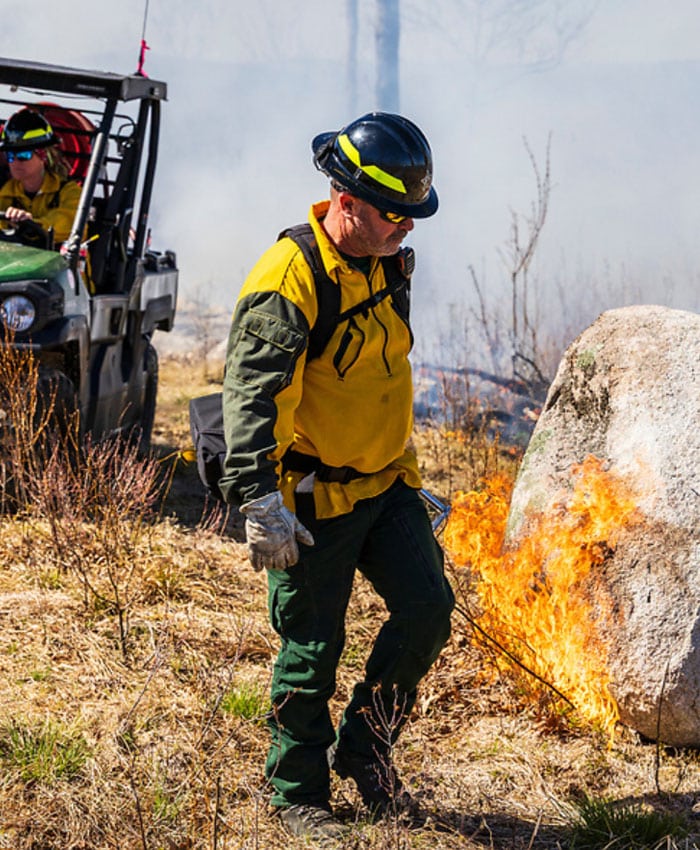 After all, the amount of advance work required to coordinate a controlled burn was voluminous; it was the first in several years for him, and it was a first for SELT.
The area to be burned clocked in at just under 20 acres, located at the north end of Birch Ridge. High velocity winds or squirrelly atmospheric conditions at that altitude would be an ignition non starter.
But that day the weather was right.
“The weather had looked pretty good for that week before,” he says. “So we felt pretty solid. You want the right stretch of good weather leading up to it. All of those parameters were identified in the burn plan that was prepared last year, which indicates, for example, what range of wind speeds, wind direction, and relative humidity is acceptable. We spent several days in the weeks leading up to the burn preparing the site and establishing the fire line.”
A fire line is an area surrounding the burn area that does not contain burnable elements. It’s essentially a buffer between the burn unit and the excluded landscape.
Previously, an excavator had scraped around the target acreage deep enough to reach the soil, removing wood and vegetation that could catch fire.
In the past, Birch Ridge was burned for blueberry production every 2–3 years, which last occurred around 1965. The historic frequency of burning was important for commercial blueberry production, active at the time. Beyond the retail value of the blueberries from the barrens, this area provided important habitat that benefited bird species like ruffed grouse, whip-poor-will, chestnut sided warbler, and eastern towhee, which rely on blueberries for food and prefer taking shelter in the dense shrubs and grasses under a mostly open canopy.
“This is a chance for us to have a unique habitat that will be complemented by nearby young and mature forests,” Chad says. “We’ll get some plant species we wouldn’t normally have and we’ll have a different cover type that’s much more open. And the blueberries will bring in insects and birds and other wildlife.” And people (think Blueberries for Sal).
In concert with encouraging the blueberries, the prescribed fire opens doors for new trees and native grasses to populate the area, a stated goal in the Birch Ridge Community Forest Management Plan.
“This is a chance for us to have a unique habitat that will be complemented by nearby young and mature forests."
As is typically the case for SELT’s stewardship goals, it’s all about encouraging structural diversity, fostering forest resilience, and deepening the portfolio of natural growth to withstand the haymakers of shifting climate.


