
A generational conservation opportunity.
A family devoted to their community.
A legacy that will last forever.
The Southeast Land Trust of New Hampshire (SELT), the Town of Lee, and the greater Seacoast region now have the opportunity to conserve more than 350 acres of productive farmland, forests, and wildlife habitat, thanks to the Banks family.
In June of 2026, SELT reached agreement with Jim and Marianne Banks to conserve more than 350 acres of the family’s land through four separate conservation easements.
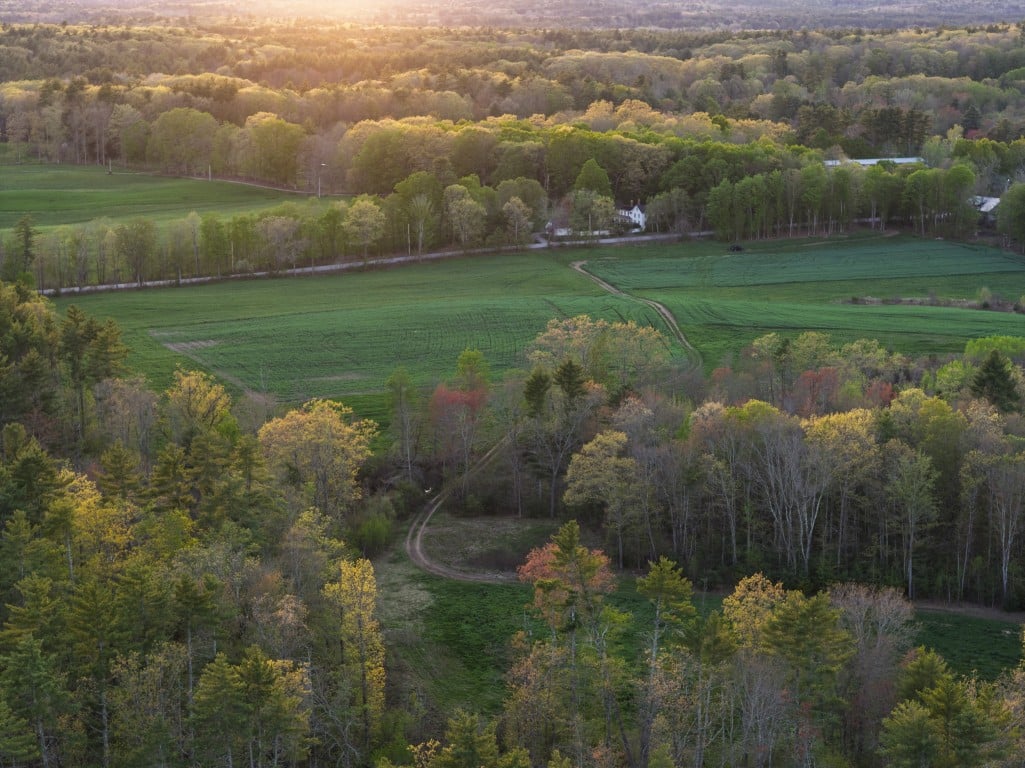
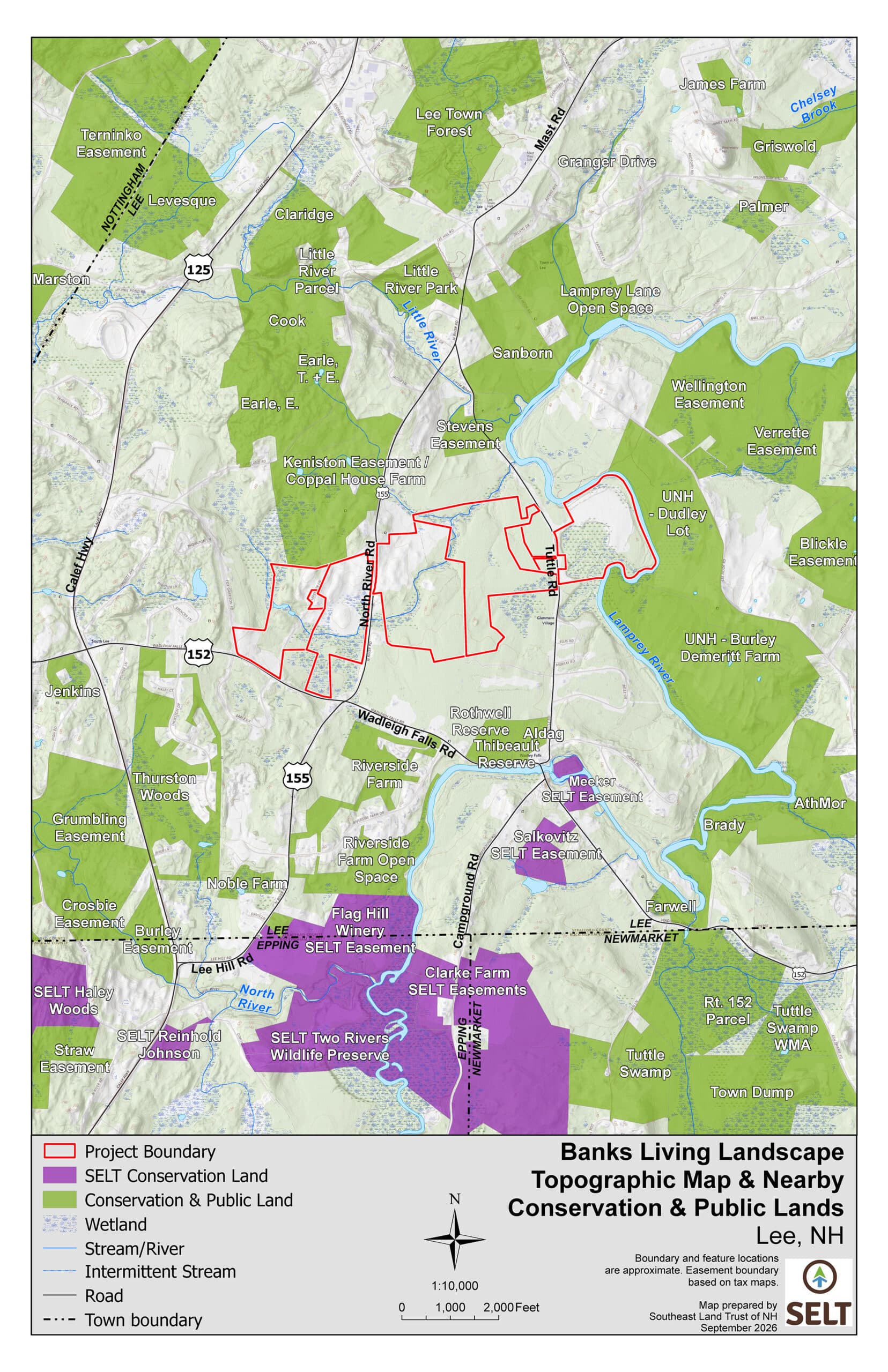
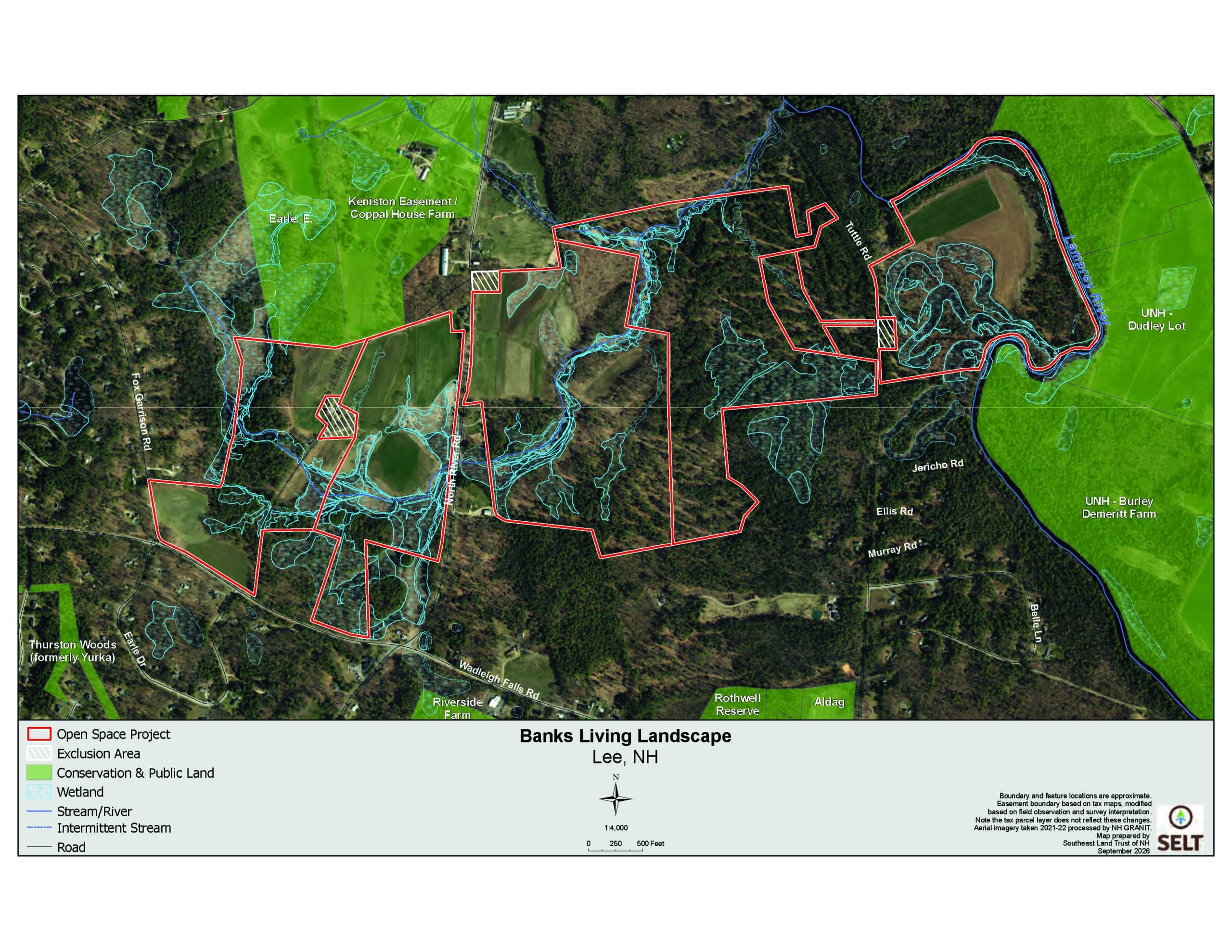
The Banks Living Landscape is an exemplary tract of land spanning from the Lamprey River west across Tuttle Road and North River Road in Lee.
A Once-in-a-Lifetime Conservation Opportunity
The Banks Living Landscape will be conserved through multiple conservation easements conveyed to SELT. A conservation easement is a permanent legal agreement that remains in place regardless of the landowner and restricts the future use of the land to protect critical natural resources.
SELT, as a nationally accredited organization and regional leader in conservation, holds more than 250 such easements, and is well positioned to monitor and enforce the easement, ensuring that this land remains open space for generations to come.
Banks Living Landscape Maps
Click images to enlarge
A Commitment to Conservation and Community
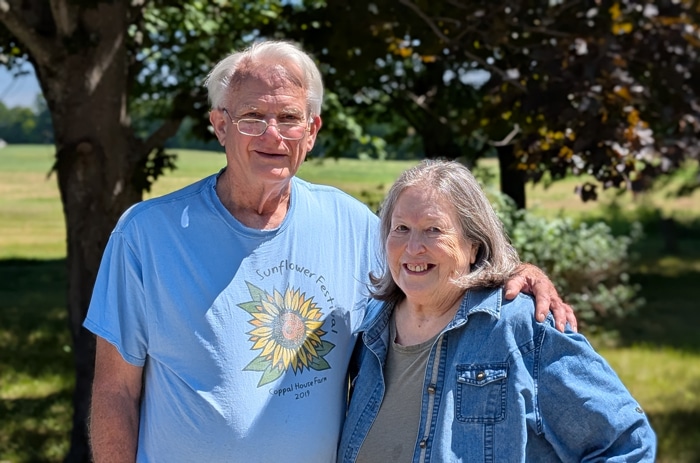
Jim Banks moved to New Hampshire in 1970 from Wisconsin, and built a strong connection to Lee. Today, Jim and his wife Marianne are active members in their community, giving of their time and talents to support others. One of their greatest legacies, however, will be the conservation of the Banks Living Landscape, the property they have lovingly called home for so long.
As part of the family’s decision making and recognizing the challenging and expensive housing market in Lee and beyond, Jim and Marianne have partnered with a local builder to construct 12 units of attainable housing. This housing will be located off of Tuttle Road and is a separate project on a different portion of the Banks land. During discussions with the family, SELT provided feedback on the location for the housing to minimize impact on the property’s natural resources.
“When people work together in the community, they can accomplish things that couldn’t have been done other ways,” Jim says. “And I have not forgotten that.”
Safeguarding Natural Resources
The Bank Living Landscape contains a remarkable diversity of critically important ecological features. From clean water protection to wildlife habitat to highly productive farmland, this property weaves a comprehensive tapestry of the most sought-after features in conservation. Community benefits include:
Preserves a mile of shoreline along the federally designated Wild and Scenic Lamprey River, supporting continued recreational and scenic enjoyment of this national treasure.
Supports our agricultural heritage and food security, by protecting 50 acres of the best farm soils and 130 acres of other important farm soils, so they are available for current and future farmers.
Maintains Lee’s and the region’s rural heritage by linking conserved and public lands, including Coppal House Farm and UNH’s Burley Demeritt Farm, to create a tapestry of more than 1,350 acres of protected lands.
Protects the drinking water quality for local communities, as the entire property lies in a state-recognized area of hydrologic concern for public water supply
Conserves varied habitat for common and threatened species of wildlife, in accordance with NH’s 2025 Wildlife Action Plan.


Farmland for the Future
Two of the four proposed conservation easements on the Banks property protect the scenic and productive farm fields visible from North River Road and located near the Lamprey River off of Tuttle Road.
The Banks family currently leases this farmland to neighboring Coppal House Farm, supporting this popular farm’s expansive agricultural activities, including producing lamb, eggs, sunflowers, barley, and related products. And knowing the future of the land is secured and protected, the proposed easements allow Coppal House Farm to continue long-term investments in the soil and the land, a challenging decision for all tenant farmers when the future of the land is uncertain.
While a conservation easement protects the underlying land from development, SELT has found that when a landowner decides to sell an easement property, such lands can become a premium property sought after by “estate” buyers, often resulting in a loss of food production. To ensure active farming has the best chance of being sustained on the Banks land, the Banks family has agreed to incorporate an innovative tool being pioneered in NH by SELT: the Option to Purchase at Agricultural Value (OPAV).
The OPAV provisions will be included in the two farmland conservation easements and require that when the property is transferred in the future, it must be sold to a either family member or a qualified farmer intending to use the property as a commercial farm. If the seller cannot find a qualified farmer, SELT would then try to locate a qualified farmer to purchase the property from the seller, or, under very rare circumstances, SELT could step into temporarily purchase the property and then advertise it for sale to a qualified farmer at its agricultural value.
The OPAV tool is one approach at keeping farmland attainable for working farmers – supporting locally grown, secure, and healthy food production in our thriving Seacoast region.
