
SELT conducted a prescribed - or controlled - burn at the Birch Ridge Community Forest in New Durham in the spring 2026. The burn advances community forest goals related to enhancing ecological values and wildlife habitat in an area that was historically burned for blueberry production.
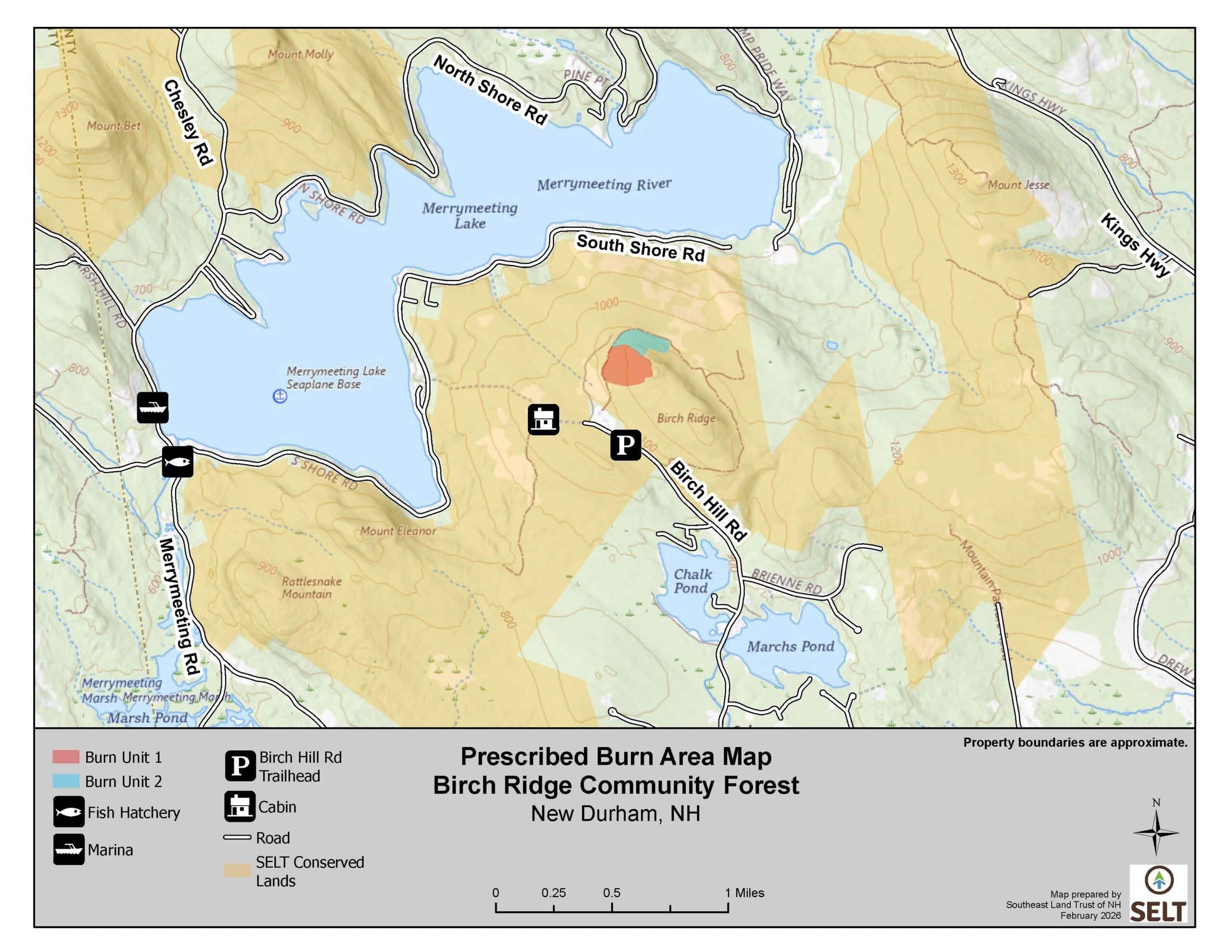
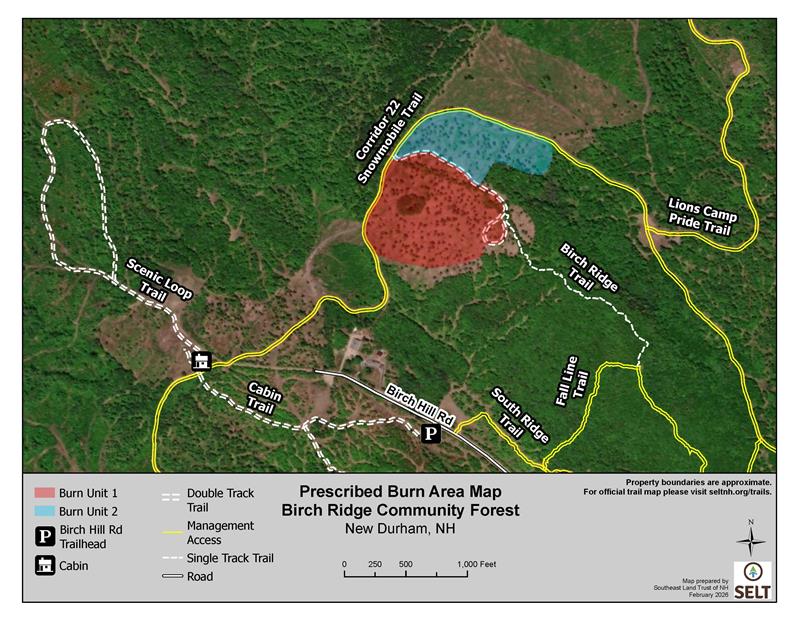
The burned – just under 20 acres – is located at the north end of Birch Ridge, roughly 0.25 miles northeast of the cabin near the Birch Hill Road trailhead. The burn was conducted by Star Tree Prescribed Fire in coordination with appropriate state and local agencies including the New Durham Fire Department.
For more detailed information, please see below. If you have any questions please email Chad Fierros, SELT's Forest and Wildlife Habitat Manager at chad@seltnh.org.
Frequently Asked Questions about SELT's Prescribed Burn at Birch Ridge
What is the history of prescribed burning at Birch Ridge Community Forest?
In the past, Birch Ridge was burned for blueberry production every 2-3 years, which last occurred around 1965. The historic frequency of burning was important for commercial blueberry production; SELT’s prescribed burn cycle will more likely be every 2-5 years, contingent on available funding and personnel. The blueberry barrens fostered by these historical burns provided both important habitat, benefiting birds and other wildlife that rely on blueberries for food and shelter, as well as the commercial sale of blueberries.
Where did the burn take place?
The burn took place at Birch Hill/Ridge between Corridor 22 and the Birch Ridge trail (location: 43.481546N, 71.140104W)
This burn occurred only in Burn Unit 1, shown on the map below, which is approximately 20 acres.
View this map for a zoomed out look.
View this map for zoomed-in look.
What safety measures were put in place to manage the burn?
Fire breaks
One reason for choosing this particular area for a prescribed burn is the presence of existing features, namely roads and wide trails, that can serve as fire breaks. As fire is slowly introduced into the burn unit from the edges (fire breaks), the burned vegetation will increase the buffer between the unburned vegetation and any surrounding areas outside of the fire breaks.
Weather patterns.
The primary weather considerations for the burn are atmospheric lift and dispersion. Essentially, these are measurements of how well air (and smoke) are able to rise into the atmosphere and disperse via wind. With the burn occurring at a relatively high elevation, sufficient lift will allow for the smoke to rise up and away from the burn units and nearby Merrymeeting Lake. Good dispersion rates allowed the smoke to leave the area before sundown, when the air cools and settles closer to the ground.
How is the prescribed burn addressed in the management plan for BRCF?
Prescribed burning has been cited as the preferred method for maintaining the approximately 33-acre blueberry area since the original 2020 management plan for the community forest (which you can read here), citing ecological and educational benefits. The management plan was approved and guided by the BRCF management committee, which includes representatives from many interest groups, including individuals with professional backgrounds in forestry, wildlife management, and firefighting.
In 2025, SELT contracted prescribed fire professionals to develop a burn plan for the two burn units. The burn plan contains extensive prescriptions for the burn, which include acceptable weather parameters, interagency coordination, burning methods and more. The group who developed the plan, Star Tree Wildfire Protection, conducted the burn.
What are the benefits of the prescribed burn?
Wildlife
Stewarding these burn units with prescribed fire will provide important wildlife benefits that complement those found on the surrounding landscape. These include soft mast and hard mast (e.g., berries and nuts for forage), shrub and grass cover important for nesting, breeding and movement, and the growth of unique plant species that occur only under specific environmental conditions. For example, whippoorwill, a species of special concern in NH, will benefit from this emerging landscape.
Blueberries
Thoughtful prescribed burning is a practice that has long been used to promote the growth and production of wild blueberries and prevent other vegetation from taking over a site.
Other habitat/forest composition
Prescribed fire, especially when utilized repeatedly every few years, will help to steer forest composition toward more fire-adapted species, like oak, and away from species like beech, birch and maple, which sprout prolifically and are already found in abundance across BRCF. SELT’s anticipated prescribed burn cycle will be every 2-5 years, contingent on available funding and personnel.
Views
The burn will help maintain the view from the trail atop Birch Hill/Birch Ridge, which would otherwise be obstructed by regrowing vegetation.
Who conducted the prescribed burn?
Star Tree Wildfire Protection conducted the burn. This group has conducted many prescribed burns up and down the east coast, including recent burns nearby in New Hampshire and the northeast. They worked in conjunction with the New Durham Fire Department.
SELT staff was involved in coordination, communications and, to a limited extent, burning operations.
How often will prescribed burning occur?
The typical burning seasons in our area are late spring and fall. SELT anticipates burning these particular burn units at Birch Ridge roughly every 2-5 years, however this would be dependent on variables like weather and funding.
Did other groups support the burn?
SELT has been discussing this project for several years and we have received interest and enthusiasm from several partner organizations. The burn plan was partially funded through the Natural Resources Conservation Service (NRCS) Environmental Quality Incentives Program (EQIP) program.
The Granite State Chapter of the Ruffed Grouse Society has followed SELT’s wildlife habitat management practices at Birch Ridge Community Forest with interest and has pledged to contribute funds to support this prescribed burn. The NH Prescribed Fire Council, with representatives from numerous agencies and organizations across the state, has provided support, guidance and expertise to SELT in advancing this project.
The BRCF management committee, through the BRCF management plan, has identified this project as a way to make progress toward community forest goals and objectives. Click here to learn more about the management committee.
Prescribed Burn Resources
Prescribed Burning Conservation Practice Standard - NRCS
The Prescribed Fire Strategy - US Forest Service
New Hampshire Prescribed Fire Council - University of NH Extension
Extent of Prescribed Fire Use - University of NH Extension
Burning for good: How New Hampshire ecosystems benefit from prescribed burns - NH Bulletin