Written by David Johnson
Photographed by Jerry Monkman - EcoPhotography
For Mark Perry, commercial farming in Strafford County is precious - and worth fighting for.
1973. Watergate dominated the headlines. The Exorcist was sending unsuspecting theatergoers into the lobby with heart palpitations. The New York Knicks won their second NBA championship. And in Rochester, NH, a 15 year-old named Mark Perry made his first commercial milk run.
While his classmates were focused on sports, proms, and "The Dark Side of the Moon," Mark had heifers on his mind. Hours before the first bell sounded at school, Mark was up, milking his herd and shipping milk. As the years passed, you could tell who the burgeoning dairyman was by surveying the school parking lot; among the ’Cudas and Mustangs, a rugged 1974 Chevrolet one-ton farm truck sat like a pack mule.
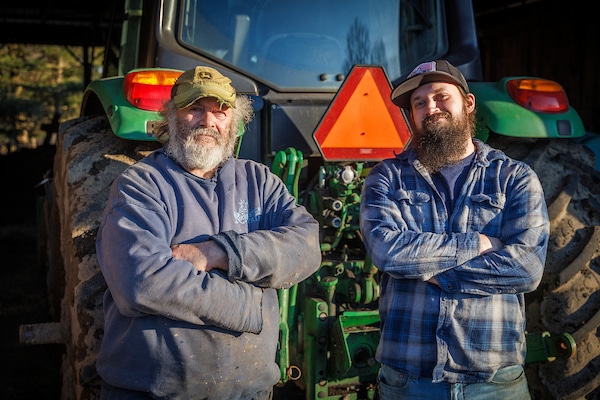 But that was fine. Mark enjoyed school enough—he was just a student of a different discipline: slinging milk and building a future in a booming dairy economy. And he was certainly no social misfit, earning significant popularity in his circle of friends thanks to his farmer-honed mechanical and welding skills, which came in handy when a pal needed a car repaired.
Fringe benefits, all happy ones. But at the end of the day (literally, since Mark would be out there with cows until night fell), it was all about the "ag." He sourced his love for farming from his days as a 4-H brat, when he worked on a dairy project and fell in love with the milking game.
“It just blossomed from there,” he recounts. “I had a neighboring farmer who sold me a few cows to start with, and I bought my first milk tank, milking machine, and some assorted equipment for $260.”
Dairy farming was the most viable career path Mark could foresee. His father always joked that raising beef cattle was “the most expensive hobby in the world,” and the meager proceeds he got from harvesting his Holsteins were far outweighed by the overhead. No, milking was the way to go if he wanted to make a living at this.
“It was the only path forward I could see as a viable job,” Mark says. “And it was actually quite true back in those days. There were five farms on my road alone shipping milk at that time. When I got my milk license, I was number 650 in the state. There were 649 other dairy farms in the state of New Hampshire. I have a great recollection of my first milk inspector telling me that.”
Of those 650, Mark was by far the youngest. And contrary to the imagined visage of a grizzled milk veteran pooh-poohing the thought of an upstart elbowing his way into the business, the Strafford County dairy community embraced him.
“The novelty of it actually opened a lot of doors,” he says. “I got to know a lot of dairy farmers in the county because I was just a young kid. I never saw my age as being a detriment, and as I look back, it was a tremendous advantage—because everybody wanted to help the kid out.”
Who is the next agricultural wunderkind?
“I had a neighboring farmer who sold me a few cows to start with, and I bought my first milk tank, milking machine, and some assorted equipment for $260.”
That’s the question Mark wants to answer. And to help accomplish that—no small feat considering the health of New Hampshire’s small, independent farming scene these days—he is conserving his family's dairy farm through SELT to give it the very best chance to remain a working farm into the future.
“It’s so hard to do today what I did, getting started in the dairy business,” he says. “We had good years in the early ’70s. In the 1980s, the dairy industry went to hell. Very few survived it. However you want to put it, there was a mass exodus out of agriculture. In 1986, I became the only dairy farmer left in Rochester.”
When he thinks back to those fateful years—when the U.S. government was offering buyouts to local dairy farmers to give them sustenance in the face of cratering milk prices, and in the process permanently rewriting the agricultural DNA of the Granite State—Mark reflects:
“I didn’t want to quit,” he says. “That’s probably because I was bullheaded. But even now, I don’t have any regrets. And the reality is, when I am done, this will probably never be a dairy farm again. It's too small. But this land has a lot of other great production uses. And if we've learned anything—especially during the pandemic—we've learned that eating and producing foods locally is important.”
That ethos led Mark toward including the OPAV as a method to ensure his land had a farming future. The Option to Purchase at Agricultural Value is a unique tool that increases the likelihood that a working, conserved farm will continue to be in farmer ownership and in active production growing food.
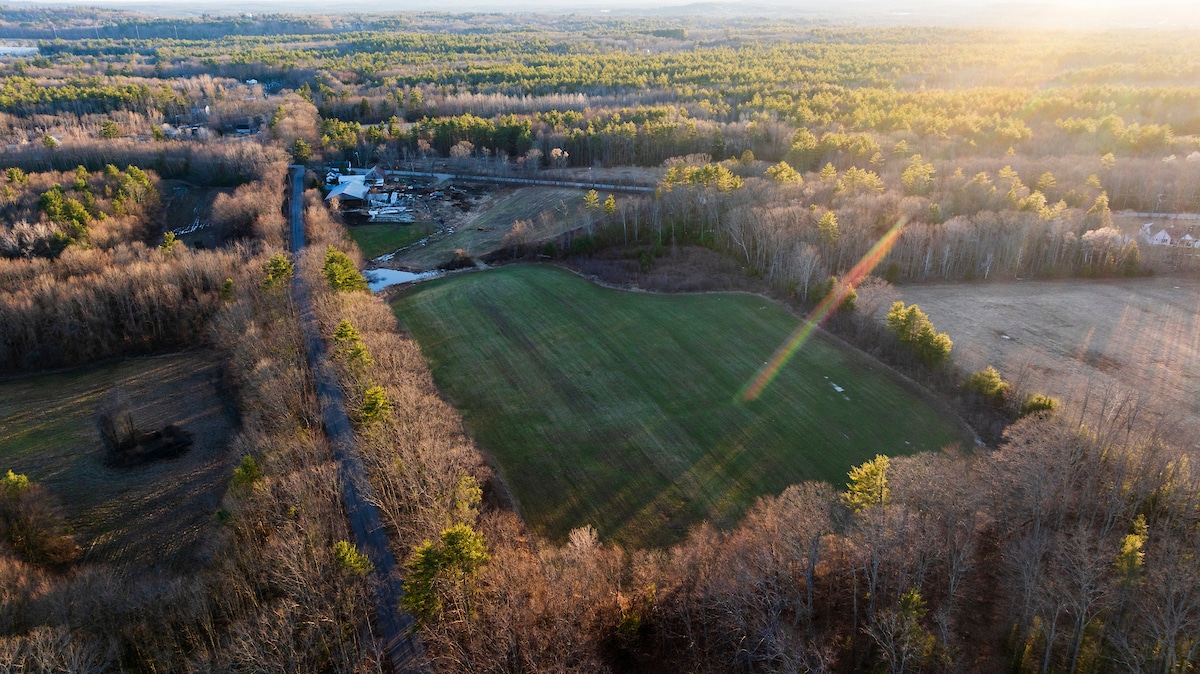
When it comes time for Mark to sell his family’s farm, the OPAV requires that he sell the farm to either a family member or an active farmer. If a non-farmer is poised to acquire the farm, SELT has the option to step in and acquire the property at its agricultural value with the intention of then seeking a farmer to farm it. In practice, SELT would try to find a farmer quickly enough that the farm could be conveyed directly to a farmer without SELT ever needing to own the property. While the conservation easement ensures the property will remain protected and undeveloped, it is the OPAV that adds an extra layer of certainty that conserved farmlands remain active, Mark’s primary wish for his property.
“Even with development restrictions, conserved farmlands are still vulnerable to being sold to non-farmers due to their privacy, large acreage, open fields, and scenic beauty,” says Ben Engel, Conservation Project Manager for SELT. “Local farmers are unable to compete with these market values and often struggle to purchase farmland. At SELT, we believe that continued access by working farmers to farmland is critical—both to our mission and the overall health of the local community. Mark’s land offers a wonderful opportunity down the line for him to pass the baton to a new farmer.”
For Mark, it’s not all about the money. In fact, a key component of the project’s success is Mark’s willingness to accept less than the appraised value for the easement (known as a "bargain sale").
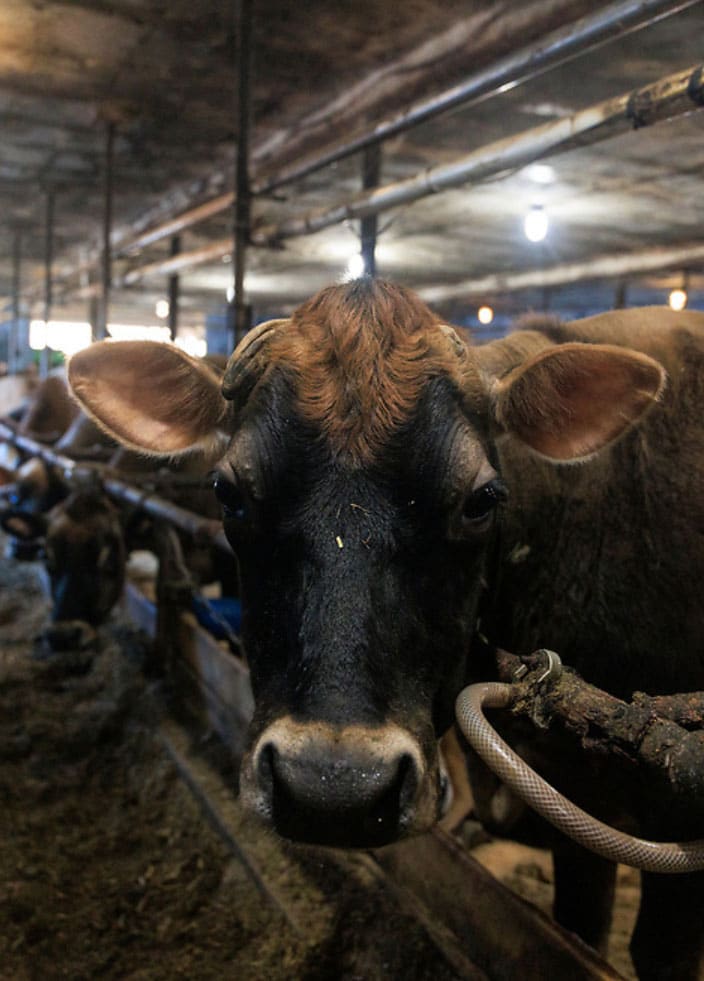 The NH Department of Agriculture, Markets, and Food’s Agricultural Lands Preservation Program awarded SELT with a grant of $200,000, which represents approximately half of the funds necessary to complete the project.
With the Legislature restoring funding for the program, Commissioner Shawn Jasper, who leads the Department of Agriculture, Markets, and Food, is excited to see a focus on farmland protection.
“It is gratifying to once again be able to work with NH farmers and our land trusts to preserve farmland," said Commissioner Jasper. "The Perry property is a prime example of the type of farm we want to see saved for future generations. It is a small working dairy farm in a city, a true rarity. As our state continues to grow, farms in population centers will become non-existent unless the land is put under conservation easements. We are grateful to the Perry Family for participating in the program and their commitment to agriculture now and into the future.”
Additionally, The City of Rochester has supported the project from the start, and the Conservation Commission voted unanimously at their July 2025 meeting to provide the final funding necessary to complete the project.
With that, the Perry family farm was on the path to permanent protection.
Mark has been a staple in the local fair scene for decades. If you gave him truth serum—well, if you just straight asked him because he would always tell you what he thinks—Mark would lament that the agricultural presence in New Hampshire fairs has dimmed.
The milieu that shaped his 4-H experiences and set him on a path to be a career farmer is not quite the breeding ground for young homesteaders these days. But, not unlike the optimism and stubbornness that kept him milking when the economics of the dairy industry were most dire, he is unwilling to lose hope that somewhere out there is the next Mark Perry.
“And if it's my kids or grandkids, that will be a plus,” he says. “But if it isn't, and it's somebody who enjoys the land as much as I do—great. There’s nothing better than when you go to a fair and you see little kids in the back playing around, or their parents are helping them take care of animals. Because you'd like to think that out of a hundred of those kids, maybe five or six of them are going to grow up to be farmers. And we will regret not having places for them to make that happen.” ■