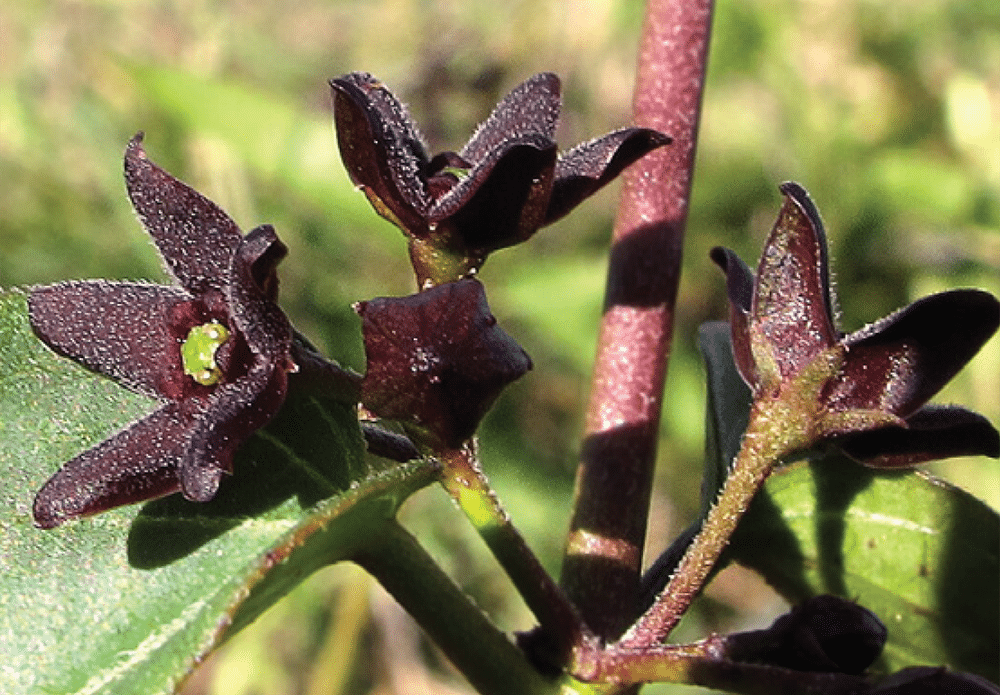
From the SELT Land Management Notebook
As an invasive plant, swallowwort, a climbing perennial brought over from Europe as a decorative exotic in the 19th century, brings deeply disruptive and destructive consequences to the environment.
They grow easily in the sun or shade and force out native plants in the understory; in fact, their roots produce toxins that actively diminish growth of other plants.
But it gets worse. According to UNH Extension:
If it lacks something to climb upon, the plants will twine upon themselves forming ropes. It is this trait that earns it the nickname “dog-strangling vine.” There is also concern that monarch butterflies will mistake swallowwort for native milkweeds and lay their eggs upon them, only to have their caterpillars starve.
Monarchs are already under pressure from habitat loss, but the tragic mix-up between swallowwort and milkweed can push the species towards even further decline.
Swallowwort provides intense challenges for control and mitigation due to their resilience. The plants can’t be pulled from the surface as they break with ease, leaving their roots to sprout. There are no natural predators to consume them, and their seeds spread through the wind. Destroying seed pods before they take flight can reduce the spread, and herbicides have proven effective (click here for more details).
Swallowwort serves as a cautionary reminder of how invasive species can disrupt ecosystems, showcasing the important role of native plants in maintaining biodiversity and ecological resilience.